Friday, August 17, 2018

Gule Wamkulu


We were greeted by this unwelcoming character as we entered the village to teach class this week.

On the way, we had a couple of uncomfortably close calls with children darting from alleyways to escape the advances of these masked men. Judging by the crowd, we first thought there was a harmless performance going on, but then it began to look a bit dangerous. Some of the troublemakers were carrying pipes and throwing rocks. It seemed the entire village had been thrown into complete mayhem.

We drove on past the armed hoodlums only to find our path blocked by one with no weapons. Because Snoden was with us and we were curious, we rolled down the window to talk to him. All he said was, "Give me money" in English, no less. We did not give him money and he didn't answer any of our questions, but we noticed a large group of villagers watching us talk to him. Some look terrified and others were yelling and cheering. (I wish I could give you more commentary on what the onlookers were thinking. Snoden thinks some of them thought we were brave--not so much regarding physical harm as spiritual--while others were just more excited to see white people than those guys.)


After discussing our experience with others and reading various articles about the origin of this strange encounter, I can offer you this modest explanation of the facts that agree in each account. (Everyone seems to have something different to say about what it all means.) I hope it helps you understand a bit more of the culture we're learning about every day.

Gule Wamkulu is a type of dance that is believed to date back to the Chewa Empire of the 17th century. It literally means Big Dance and was traditionally performed by the Nyau, a secret society of the Chewa people, at among other things, funerals and initiation rituals. It involves fast, intricate footwork and flinging dust into the air to the beat of drums. Young men are appointed by village chiefs to spend several nights in the cemetery then emerge dressed in masks and costumes made of various materials including feathers and animal skins. Each costume represents a spirit, and the dance is thought to be a communication with the villagers' dead ancestors and even the unborn.

Some spirits are harmless but others invoke fear, and many people, especially children, run and hide when they see them. Even if someone recognizes one of the "spirits" as her husband or brother, it is considered taboo to mention it, the punishment of which may be a beating or worse. While the men are in character they are thought to be spirits themselves, appointed by their god Chiuta to communicate with the dead.


Beliefs and traditions surrounding Gule Wamkulu has changed over time with an increase in foreign settlers and missionaries bringing new teachings and ideas. However, there is still a strong presence here, especially after the July harvest, at which time the dances are said to ensure fruitful harvests in the future. For many, the original purpose to communicate with the dead is a serious event, but for others it's just an amusing tradition to be celebrated in honor of southern Africa's heritage.

It seems that we came upon the costumed men before or after their dance and witnessed them chasing and scaring the villagers. When we reached our study group, many of our students were absent. Maybe they were hiding in their homes as many people do when they see the "spirits" approaching.

As thrilling as it is to experience African culture on this level, we hope to educate those entrusted to us that Gule Wamkulu is tradition, not truth. I asked John what he thought people would think of such a bizarre and scary site as we saw today. He said probably the same thing a Malawian would think if he visited an American neighborhood around the end of October.

Monday, August 13, 2018

Malawi's Future


I asked a group of teenage boys in the village what they want to do when they graduate high school. At least two of them are proficient in English, and I have been studying Chichewa enough to help with the occasional word or phrase, so we didn’t need a translator. Though they understood the words, they were a bit surprised and not sure how to answer my question. So, I rephrased it, “What do you want your job to be after school?” 

“Oh!” one of the boys said. “I want to be a soldier.” I asked if that was because he really wanted to be in the military or if he didn’t think he could do anything else to make a living. He looked confused, so I asked the question to the group in a third way. “If you didn’t have to worry about money at all, what would you want to do every day?” In that case, he said, he would like to be a chef. Now we were getting somewhere. 

“Okay, so you like to cook?” 

“Yes, I love to cook.”

“What do you make?”

“I know how to make nsima* and lice,” he offered proudly.

“No,” said another boy in the group, “It’s r-r-rice, not l-l-lice. Remember what we learned in English class?” (In Chichewa, the letters L and R make exactly the same sound, so they consider them interchangeable. I have been repeatedly practicing the two unrelated sounds with them in English class.)

“So you can make nsima and rice. Do you know how to cook anything else?”

He shrugged his shoulders and shook his head. Then it hit me that I learned to cook from my mom, by watching cooking shows on television, and by reading books, three resources many of these kids don’t have access to. Now, the availability of culinary videos online is comprehensive enough to rival the curriculum of any cooking school—to anyone who has a computer and internet, that is. Shortly after college, I began to develop a love for cooking and spent hours trying new recipes with exotic ingredients that may or may not make it to my table. If I ended up throwing out an entire dish, it didn’t mean I wouldn’t eat, it just meant I would go to the store and try again. These kids are lucky to get enough food to sustain them each day and certainly don’t have the luxury of wasting a morsel of it. I felt a little ashamed of my question and quickly added, “Do you want to learn to cook other things, because I could teach you?” His smile told me yes. Then I asked what he would think about opening a small restaurant where he could cook for other people. That smile was even bigger. 

Another boy said he wanted to be a driver and a third said a mechanic. I asked why they felt they couldn’t do these jobs after graduation. They told me they’re not learning these skills and there’s nobody to teach them. I asked what they are learning in school and they listed the typical courses you would expect a high schooler here to take like geometry, chemistry, English, Chichewa, and history. I asked if I could see their books. “Oh, we don’t have books.” 

“What do you mean you don’t have books? You don’t have text books? How do you learn?”

“The teacher writes everything on the board and we copy it onto paper.” 

“Well, does she help you if you need it?”

“She can’t really. There are too many students in one class.”

“How many?”

“At least one hundred.”

“Is there a library at your school?”

“Yes, but it doesn’t have many books and we’re not allowed to take them home. They’re afraid we’ll lose them.”

I wondered out loud what these teachers get paid to teach classes with hundreds of students who have no books. One boy said they get paid MK25,000 per month, which is about thirty-five dollars. (I made sure to write that number out with words, so you wouldn’t think I left off a zero.) “How do you know that?” I asked. “They tell us,” he said. 

“What do you think about our opening a school here? We could teach you all the regular subjects but also how to do the job you want to do when you graduate. We could even start small businesses so you could work those jobs.” The nodding and smiling was unanimous. We told them they would have to pray. Pray for land, teachers, books, money, and everything else that a proper school needs. I believe they will. I don’t think they’ll be able to help it. 


As I’ve said before, education is a desperate need in Malawi. Good schools are few and far between and usually not for those without abundant resources. We have no interest in giving perpetual handouts to anyone but those who possibly will never have the ability or aptitude to provide for themselves. Those people we are called to support indefinitely, and we have already started to make a number of them a regular part of how we spend our tithe. These kids, however, are one good education away from not only making a living for themselves but also helping to bring up the next generation. They’re not lazy or stupid. Instead they’re bright and hardworking. We’ve seen it with our own eyes. They study the lessons we give each week and they’ve been making bricks by hand from the very land we’re meeting on for class. They plan to build a house and an outhouse for one of the families in the village. If they can do that, surely we can put together a plan for a school that will serve this largely forgotten generation. I mean, it’s not rocket science, right? Unless of course one of them wants to be a rocket scientist. In that case, we would like to be their first step in getting there. 


Please consider how you can be a part of this. We need prayer, money, and people. We also need books, and lots of them. We plan to be in the States at the end of the year. If you have books, including text books, in good condition that you are willing to donate, please let us know. If you wish to make a tax deductible donation in any amount, please send it to: Westworth Church of Christ, 5728 White Settlement Road, Ft. Worth, Texas 76114, ℅ Malawi Mission Work, or you can give with a click at http://www.westworthcoc.org/malawi-mission/ Thank you, and God bless you.


*Nsima is ground maize cooked into a hot porridge. It’s a staple eaten daily by most Malawians.

Tuesday, August 7, 2018

Today in the Village


Today in the village we taught class to a group of about sixty people from one month to sixty years old. Some of them want to learn the Bible, some English, and others to read in their own language. It’s a tricky dynamic but seems to be working. We’re not giving anything but education and that seems to be enough for them. Others have come and gone when they realized we weren’t there to give them money or food, which is one reason we’re careful about what we bring to the meetings. I know they’re learning because John quizzes them on Bible facts that he covers, and I test them in English vocabulary. They are studying. 

The men sit in chairs and the women and children sit on reed mats. They always try to tie a tarp to the trees above us for shade, but today it was ripped off by the wind. The blowing sand was almost unbearable, but nobody got up to leave, so we sat through it, too. John taught from the book of James, introducing the concept that the Bible is like a mirror for us to see how we’re doing and fix things out of place. I taught them that a Q in English always has a U with it and what a pronoun is, though they don’t have a word for pronoun. That’s what they learned. Our family learned a lot more.

There was a new lady who came over from a neighboring village. She’s been curious about what we’re teaching but afraid that she’ll be beaten for showing up. She’s part of an animistic religion that punishes anyone who pursues any other faith. She worries she’ll be cursed for joining us today. Next to her was a woman holding two newborns. She came because someone from the regular group invited her. The twins she was holding have three siblings, and their father was killed in a bar fight the day after they were born. She came because she was invited but didn’t expect much from us or our God. The group agrees they want to help her and her children. I just held one of her babies and said I’m sorry, one of the few phrases I know in Chichewa. She seemed to appreciate that and put her hand on me, which told me she understood. I was proud of our group.

Another man who has been coming to the studies told us today that he cannot hear much of what is being said but wants to learn. He showed us a wound on his leg that is unlike anything I’ve ever seen, except in pictures. The majority of his ankle and part of his foot seem to have been eaten away by an infection, which was not covered by any bandage. He simply lifted his pant leg to show it to us. After coming to our classes for several weeks, he says he feels like we’re safe enough to ask for help. He’s HIV positive and has had the open wound for eighteen years since his mother accidentally dropped a hoe on his leg while working in the field. Because of his HIV it has never healed and no medical care facility that he can afford can do anything about it. I sent a photo of his wound to a friend who works in the medical field here to see where we can take him for some help. We’ll see if anything can be done to improve his hearing after we get the more urgent need of his foot addressed.

Our family has never been so entrenched in such need as we encounter each week in this village. These people have the same capacities we do but hardly any resources. The kids that our boys have befriended will soon be going back to school, some too far away to keep coming to our classes. They say they are required to go but aren’t learning much. They tell us, for example, that they would like to stay in our English classes because theirs has 300 kids to one teacher and is taught by someone who doesn’t really speak English at all. They say that only the families with money get a decent education. They have no idea what they’ll do when they graduate and don’t expect to have any specific skill or fluency in English. Where does that leave them? It doesn’t seem right. Surely these kids could be the doctors who heal and the teachers who educate their own people in the future. 

We told them we’d like to open a school for them and raise money to pay for their books and more teachers. We told them we would like to have a clinic that would assist them in finding the help they need if we can’t give it. One man pointed out, “You already have a school and clinic. It’s here.” We didn’t realize they saw the situation that way. I guess that means we just have some expanding to do so we can educate and serve more people. I hope you’ll consider how you can help us through prayer, financial support, or even your presence, because this is a much larger endeavor than we can pull off on our own. We’ll keep reporting. You let us know what you can do. Thank you! 

Saturday, July 28, 2018

Visiting the Jewells in Malawi (Guest Post)


Hi, my name is Carys Blume and the Jewells asked if I could write a blog post about the time that I spent with them observing their ministry. I want to apologize in advance because I'm not a very good writer and I might not do the Jewells and the awesome work that they are doing justice. 


I spent six weeks with them getting to see their ministry grow firsthand. They, as you probably already know, are working on starting a lot of amazing things in this little village about an hour away from their house. Their plans are to start a school, open some sort of medical center, and many other things with the objective of offering these people a better lifestyle and more opportunities than they would normally ever have. They do everything they do out of pure love, and it's amazing to see God work through them with such a strong purpose.


I remember there was one day that I went to the village with Mr. John and Andy right after I had decided to come back from another organization because I didn't feel like that was where God wanted me to be. I selfishly really was looking for a clear signal from God that I had made the right choice. By the time we got there, there were so many kids there already waiting for Mr. John's message. Throughout his speaking, I was getting this overwhelming feeling of peace about my decision and joy about being where I was. But, there was a moment at the very end that completely made my day and made me truly see how much they need God but how present He already was in that place. Mr. John was explaining to the kids who the head of the church was. He was explaining that even though he was giving the messages, it wasn't him, and he asked who they thought it was. There was dead silence for about a minute, and then one little kid yelled out, “Jesus Christ!,” and Mr. John and I looked at each other just like, “That was really cool.” 


There is no way to spend time with the Jewells and not immediately see how they are being used by God immensely. Some of my favorite times in Malawi were getting to see them teach. Miss Samantha is such a good teacher, and it was really amazing to get to see her be silly with the kids but still be able to command respect and obedience. She is real with them and, honestly, by what I could see, Malawi needs people that don't back down from conflict. That is who she is. She is one of God's warriors for sure. It was also amazing to see God's words flow through Mr. John with such honesty and all-up-in-your-face-ness (what I like to call it) because that's what God needs, people to speak His message all up in your face with no fear, no holding back, no shyness. It's amazing to see the respect and love they get by just talking about God the way they do.


It's also been amazing to see their boys grow in ways that many other kids don’t. They see things firsthand, at such a young age, that many people don't see in their whole lifetime. They have truly started to embrace the culture and be okay with having less. It's especially cool to see Jonah play guitar and sing for the people and truly start to be a part of that community. It's just awesome. It's cool to see that they are kids that can adapt and make friends and grow in a place that can sometimes not be that fun for kids. They are special kids.


With what they do, there is no way the devil isn't going to try to mess with them. It seemed like every day there was a new obstacle for them to overcome or just learn how to deal with. But I saw them each and every day deal with it head on, not letting the devil get any high ground. Although they might get discouraged at times, they always find what they need in God,s  and I never once saw them give satan the victory. They are strong. Malawi needs strong people. Malawi needs the Jewells.


Thursday, June 28, 2018

Turtle Flipping


This month marked the fifth anniversary of my mother’s death. Though she wasn’t a Christian during my upbringing, she did accept Jesus about a year before she was diagnosed with Alzheimers. As I ponder my childhood, I realize she inadvertently taught me Christian principles throughout my life. One in particular has been weighing heavily on me. 
My Mom and I with Banjo,
the Dog She Gave to John and Me
When we first got cable television at our house, I watched a lot of National Geographic. I loved the animal documentaries. Mom seldom sat down to watch a show, but she would walk through the living room and comment. One time, during a documentary in which a land tortoise had been flipped upside down and left for dead in the hot desert sand, my mom, who was very practical, threw out, “Why doesn’t the camera man just turn him over?” I never watched National Geographic the same way after that. The lesson was immediately apparent and, though I love photography and writing, it destroyed my chances of becoming a journalist. I would ruin too many stories by flipping over turtles. 

When John and I visited Malawi last May, we saw so much need that we couldn’t ignore it. I could almost hear my mom say, “Why don’t you just go and see if you can make a difference?” Or, maybe that was Jesus’ voice I heard. Either way, we’re here now and have already been involved in several real-life documentaries. This week we're helping a mother in the village get hernia surgery on her infant. The cost is about twenty-five dollars, but for someone who can’t pay for a bus to get to the hospital, it might as well be twenty-five thousand. We're also starting a phonics program in the same village for kids and adults who want to learn English and to read in their own language (Chichewa). Many just want to be able to read the Bibles we've given them and have been studying from. Another woman just had eye surgery to remove a cyst that was causing her pain. There are other stories, but I won’t go into all of them now. Instead I have and will continue to post them here. 

I used to assume that, like in the United States, there were programs in every country to take care of the population’s indigent. Not so. If someone here is sick and cannot afford proper medical care, she dies. Sure, there are free clinics and hospitals, but not every issue can be addressed there. Also, if someone is hungry and can’t afford food, he starves. Yes, there are missionaries and non-governmental organizations (NGOs) addressing these issues, but there is not enough help. I don’t know the statistics and I’m not aware of every effort to improve the quality of life in Malawi, but I don’t need to know all of that to know there's still a great need. I have personally met people who are sick and cannot afford transportation to get to the free clinic, and I have met people who are hungry and have no food. I've heard the stories first hand about friends and family members who have died of starvation and disease. We're confident this is where we need to be. Giving a handout helps immediately, but we're also looking at longer-term goals. We want to be a part of lasting changes in the way of education and training that will help people who have never been given opportunities to improve their lives.

I’m going to continue to post photographs and write stories about our experiences in Malawi, but our primary goal is to flip over as many turtles as we can. I can talk about all of our hopes and dreams for this ministry, but I would like to take a page out of my mother’s book and be more practical than that. If you make a donation to this mission, we will use it to pay for someone to eat or go to the hospital. It’s that simple. Thanks to those of you who sent money this month to allow us to take care of the people I listed above. Here is a photo of Enellese and baby Wonderful, the one in need of hernia surgery. Thanks to your generosity, he'll get it soon.
Enellese and Baby Wonderful (She wanted me to tell you
"Zikomo Kwambiri,"
which means thank you very much.)

Please send donations to: Westworth Church of Christ, 5728 White Settlement Road, Ft. Worth, Texas 76114, ℅ Malawi Mission Work, or you can give with a click at http://www.westworthcoc.org/malawi-mission/


Sunday, June 24, 2018

My Kindergarten Education in Malawi


I didn't expect to teach kindergarten in Malawi, but when it became apparent that God himself might be recruiting me for the position, I didn't want to say no. 

Shortly after we arrived, Ben's teacher announced that she would be moving out of the country. I texted the secretary to say I could fill in if they didn’t find a replacement. She promptly replied that the position was filled, which was a relief since I was looking forward to a break from teaching. (I've been homeschooling the boys since Jonah was old enough to go to school.)

Later that day, John needed to use my phone and, glancing at a new message, asked why I hadn’t told him I was going to be teaching kindergarten. I thought he was confused until I looked at the message history. It said the third grade position had been filled. Then came the question, "Would you be willing to teach kindergarten?" followed by the large blue thumbs up that I had never used in a text much less to negotiate employment. I called the kids in to find out who had been playing with my phone, but they reminded me that I have a password to keep that from happening.

I drove to the school to explain that there had been a misunderstanding. I was too late. Other teachers greeted me with congratulations. As bad as I felt about doing it, I had to set the record straight, which I did. Later, the headmaster called to ask me to reconsider. I thought about the five and six year olds who were in the same boat as Ben had been without a teacher, and I agreed to fill in through the end of the year. (I should mention that there is one other kindergarten teacher who did a fine job including both classes in her lessons as well as a teacher's assistant who also filled in the gaps during the interim, but the kids and their parents rightfully expected a dedicated teacher of their own.)

Here I am with the little cherubs from kindergarten. 
They certainly were a blessing after all, and I learned some very interesting things while I worked with them and their families. For instance, the Malawian parents who can afford a school other than a public one don’t always teach their children Chichewa, the traditional language. Some only want them to learn English. The kids giggled every time I shared the new Chichewa words I was learning and couldn't fully understand why I was studying it. Also, there are many families who practice other religions that send their kids to school here, because they recognize it as one of the best educations in the city. However, I learned through conversations with parents that some kids are required to go to one hour of religious school for each hour they participate here to counteract the Christian teaching they received. The parents are aware this is a Christian school but not all parents want their children to be Christian. It’s a delicate balance but one I’m confident tips in our favor, as we have Jesus on our side. 

Now that we have a year of school under our belts, we plan to go back to homeschool and get more involved in the ministry that seems to be developing in one of the villages outside of town. This in no way means we’re not planning to prioritize our kids’ educations. In fact, we hope to make our work a major part of it. The opportunities for our boys to experience life and friendship with people that live a completely foreign lifestyle to anything they have ever known is a godsend. Also, we have made lifelong friends during our time at the school and look forward to investing in those relationships over the coming months and years. Possibly the most important piece of information we have learned in our first eight months in Africa is the great need for more educational opportunities, not just for privileged kids, but also for all Malawian children. We've seen a huge contrast in the quality of education in the city for families who have money and in the villages where they don't. We hope to be a part of the remedy to that problem.

Thank you for your support and encouragement during our first eight months in Malawi. We believe God has big plans for the end of our first year and for our second year and beyond. We have been blessed with faithful financial supporters who have made this possible, and we expect to be growing and developing to the point that we will need a bigger team to move into the future. Please consider how you might be a part of this mission. Every contribution helps. 

Please send donations to: Westworth Church of Christ, 5728 White Settlement Road, Ft. Worth, Texas 76114, ℅ Malawi Mission Work, or you can give with a click at http://www.westworthcoc.org/malawi-mission/


Tuesday, May 29, 2018

Riana


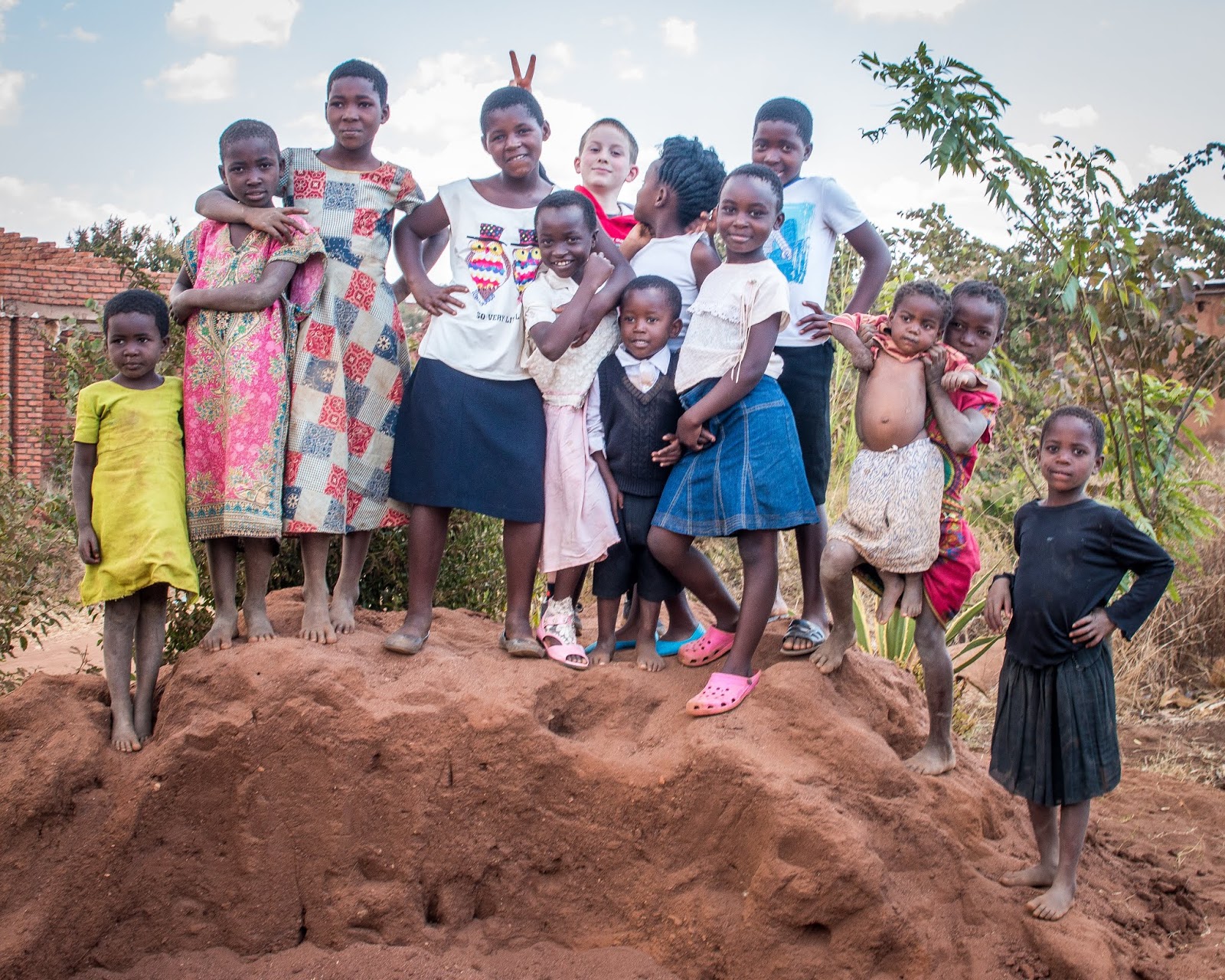
We have been visiting three different villages lately to see how we might fit in. This is a picture of the children in one of those villages. They run along side our truck each time we slowly drive down their treacherous dirt roads to get to the house where everyone meets up for Bible study. Sunday, John baptized four people in a pink bathtub we bought and transported on top of the truck. (There is no other available water source but to fill the tub from a hand dug well.)

I sat on a reed mat next to a little girl who had her feet stretched out near me. (She is the one to the far right in the photo, wearing the yellow skirt known as a chitenji. Her name is Riana.) I looked down to see a nasty boil near her ankle. After the study I asked if I could look at it. The mother was happy to let me, and Riana was shy but compliant. The mother showed us more spots on her back. She said they started about a week ago. I asked if I could take photos to show to a medical professional. She had no problem with that and seemed grateful.

Our friend at Blessings Hospital, one of the other places we have been regularly visiting, was kind enough to look at the photos and tell us that Riana certainly needed immediate attention. We sent money and instructions for Riana's mother to take her on a bus to the hospital, which offered to treat her on our word that we would cover the cost. Our friend assured us it would be nominal by our American standard.

We later got word that, not only did Riana have a serious skin infection, but she also tested positive for malaria. She is now being treated for both. All we can say is, "Thank you, God, for allowing us to notice the little wound on her foot."

According to UNICEF, malaria kills a child every 30 seconds. Thankfully, Riana won't be one of those. Praise Him for four new souls added to His church and for saving Riana from a life-threatening illness. It was a good Sunday.